




Blog / Chevrolet Dealer

Chevy Suburban vs. GMC Yukon: Which SUV Fits Your Needs?

Chevy Suburban vs. GMC Yukon

Breaking Down the Differences

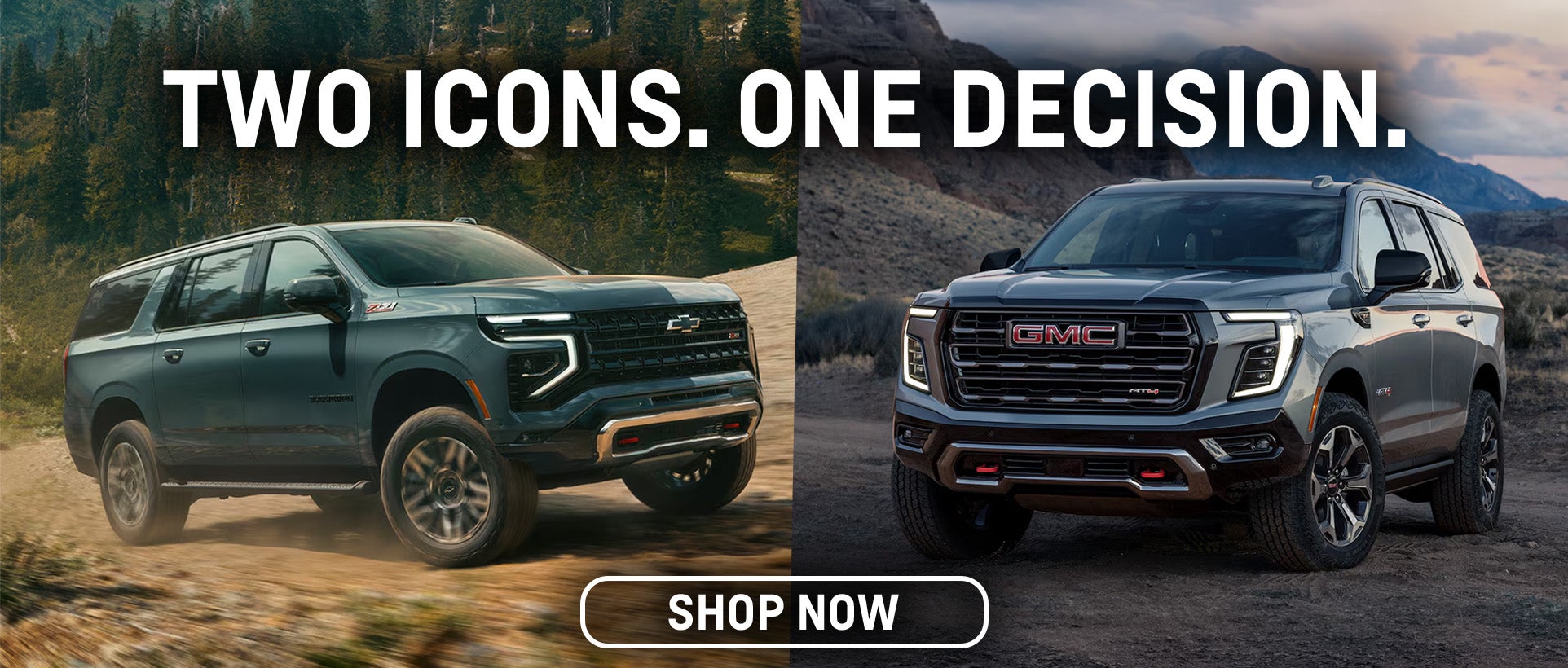
If you are choosing between the Chevrolet Suburban and the GMC Yukon, you are really deciding how much space, trim flexibility, and premium feel you want for your money. In any serious look at Chevy Suburban vs. GMC Yukon, the important differences are not basic capability alone, because these GM siblings share a lot underneath.

What matters is where each SUV creates value for a family buyer. This comparison covers pricing, cargo room, powertrains, technology, ride comfort, trims, and real-world use cases, with a clear winner in every category. Stay tuned to see which SUV comes out on top, and head to Preston Chevrolet of Aberdeen to test-drive the winner!

Quick Verdict

Bottom line:

  • Best overall value: Chevy Suburban, because its trim levels usually deliver comparable capability at a lower entry price.
  • Best for maximum cargo behind the third row: Chevy Suburban, because the longer body creates more usable luggage space.
  • Best for premium cabin feel: GMC Yukon, especially in Denali and Denali Ultimate trims with richer materials.
  • Best for broad trim/value flexibility: Chevy Suburban, because its lineup covers practical family needs before luxury pricing takes over.
Pricing and Value: Chevy Suburban vs. GMC Yukon

The Chevy Suburban is the mainstream full-size SUV in this pairing, while the GMC Yukon is positioned as the more premium-branded sibling. That distinction matters because similarly equipped versions often drive very similarly, yet the GMC Yukon usually asks buyers to pay more for branding, trim presentation, and cabin finish.

What to Compare on Window Stickers

Compare standard versus optional safety tech, wheel and tire sizes, towing package content, and interior upgrades before assuming one is the better deal. Infotainment upgrades, premium audio, and captain's chairs are frequent price escalators that can make a GMC Yukon feel tempting but can also make a Chevy Suburban the more rational buy.

Category winner: Chevy Suburban — It usually gives families the lower-cost path to the same core platform, engines, and utility.

GMC Yukon Performance

The GMC Yukon and GMC Yukon XL share the same lineup of powerful engine options, giving drivers the flexibility to prioritize performance, towing capability, or efficiency. Standard models are equipped with a 5.3L V8 engine that delivers 355 horsepower and 383 lb.-ft. of torque, providing strong everyday performance for commuting, family travel, and towing. Drivers seeking additional power can upgrade to the available 6.2L V8, which produces 420 horsepower and 460 lb.-ft. of torque for quicker acceleration and enhanced towing confidence.

For those who value fuel efficiency without sacrificing capability, GMC also offers an available 3.0L Duramax® Turbo-Diesel engine. Beyond its performance credentials, the GMC Yukon stands out with a bold, upscale design featuring signature LED lighting, a prominent GMC grille, and available 22-inch wheels. Higher trim levels further elevate the experience with premium materials, advanced technology, and refined styling while maintaining the versatility expected from a full-size SUV.

Chevy Suburban Performance

The Chevrolet Suburban comes standard with a 5.3L EcoTec3 V8 engine that produces 355 horsepower and 383 lb.-ft. of torque, delivering dependable performance for daily driving and long-distance travel. When properly equipped with the available Max Trailering Package, the Chevy Suburban offers impressive towing capability, making it a strong choice for hauling boats, campers, and trailers.

A 10-speed automatic transmission helps maximize power delivery and efficiency, while the SUV's suspension tuning maintains a composed ride even when carrying passengers and cargo. To make towing easier, the Chevy Suburban offers advanced trailering technologies, including multiple camera views, trailer profile memory, and driver-assistance features designed to improve confidence behind the wheel.
Chevy Suburban vs. GMC Yukon

Powertrains and Performance: Chevy Suburban vs. GMC Yukon

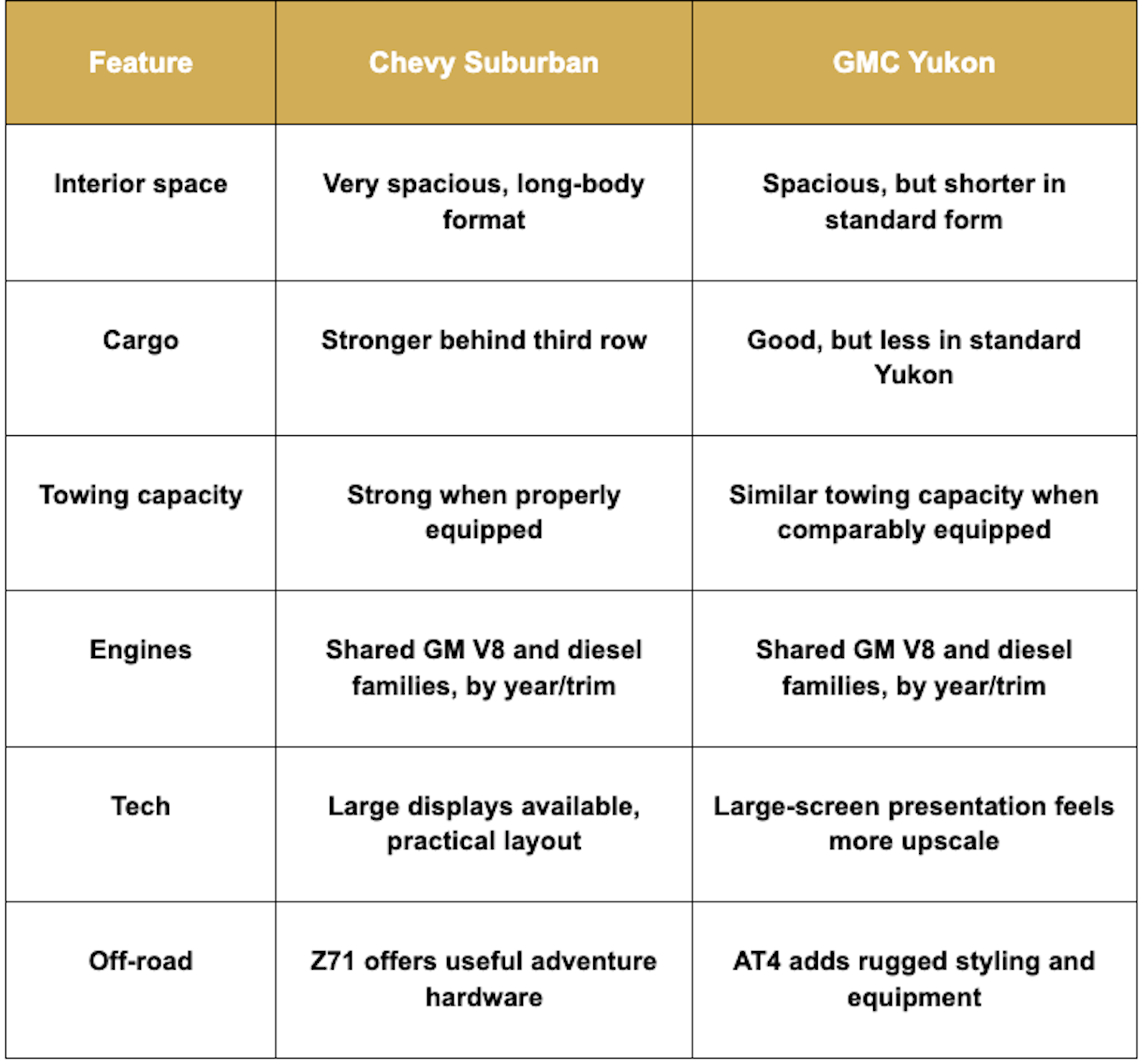
Because the Chevrolet Suburban and GMC Yukon are built on the same full-size SUV platform, their performance capabilities are remarkably similar. Both models offer comparable engine options, towing technologies, and available four-wheel-drive systems. As a result, most buyers will notice greater differences in trim-level features, suspension setups, and overall value than in outright performance.

The GMC Yukon often feels more upscale thanks to its premium trims and available luxury-focused equipment, while the Chevy Suburban typically delivers similar capability at a lower starting price. In real-world driving, acceleration, highway comfort, and towing performance are closely matched when comparably equipped.

Towing and Hauling Considerations

Maximum towing capacity depends on several factors, including engine selection, drivetrain configuration, axle ratio, and available towing packages. For that reason, shoppers should always verify the specifications of the exact model they intend to purchase rather than relying solely on published maximum towing figures.

Both SUVs are capable tow vehicles, but the Chevy Suburban's combination of strong towing capability, expansive cargo space, and lower overall cost gives it an edge for many buyers.

Category Winner: Chevy Suburban — It delivers nearly identical performance and towing capability to the GMC Yukon while offering more cargo space and a stronger overall value proposition.

Interior Space and Cargo: Chevy Suburban vs. GMC Yukon

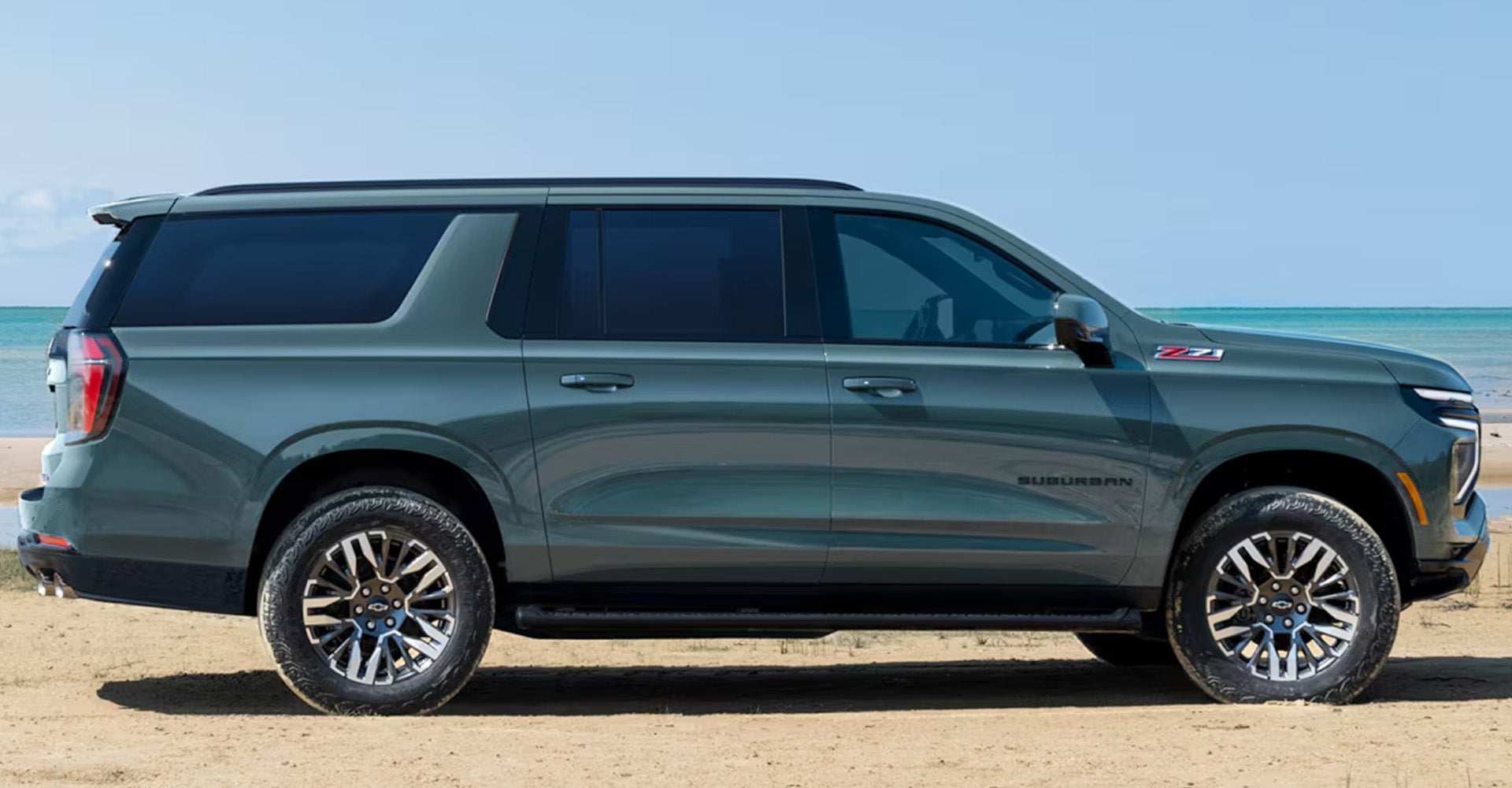
One of the biggest differences between the Chevrolet Suburban and GMC Yukon is overall size. As the longer version of Chevy's full-size SUV, the Chevy Suburban offers more cargo space behind the third row than the standard GMC Yukon, making it a practical choice for families who regularly travel with a full cabin. The Chevy Suburban offers up to 144.5 cu.ft. of best-in-class maximum cargo volume, giving drivers plenty of room for strollers, sports equipment, coolers, luggage, and other bulky items. Beyond cargo capacity, the Chevy Suburban's extended wheelbase also helps create a more spacious third row with easier access and additional legroom. This combination of passenger comfort and generous storage makes the Chevy Suburban especially well-suited for road trips, daily errands, and active family lifestyles.

Best Use Cases for Each

The Chevrolet Suburban is ideal for families who frequently travel with seven or eight passengers and need maximum cargo space behind the third row. Its extended wheelbase provides a significant storage advantage for road trips, airport runs, and active lifestyles that require plenty of gear.

The GMC Yukon is a great fit for drivers who want three-row seating but prefer a slightly shorter overall length and a more premium look and feel. With upscale styling and luxury-focused trim levels, the GMC Yukon delivers a refined ownership experience without compromising capability.

Category Winner: Chevy Suburban — Its longer body creates substantially more cargo room, making it the better choice for families and drivers who regularly need extra storage space.

Ride Comfort and Handling: Chevy Suburban vs. GMC Yukon

Ride quality in this class depends heavily on suspension options, tire sidewall height, wheel diameter, and trim tuning. A GMC Yukon Denali can feel more isolated and premium, but a Chevy Suburban with comparable suspension hardware can narrow that gap enough that many families will not find the price difference justified.

For family use, highway stability, second-row comfort, cabin quietness, and compliance over broken pavement matter more than sporty reflexes. The Chevy Suburban's long body also contributes to a settled road-trip character, which is valuable in a vehicle designed more for distance than city agility.

Chevy Suburban vs. GMC Yukon

Daily Driving vs. Road Trips

The GMC Yukon can feel easier to live with in tighter urban environments because the standard model is shorter. The Chevy Suburban gains the edge on long trips because cargo loading, seat support, and reduced packing compromise make travel less stressful.

Category winner: Chevy Suburban — It delivers excellent comfort with a stronger long-haul family advantage.

Off-Road and Adventure-Oriented Options

The Chevy Suburban Z71 and GMC Yukon AT4 both target adventure buyers with rugged styling themes and useful equipment. In real-world trail use, tires, underbody protection, and ground clearance matter more than trim branding, making the better-priced setup the more logical choice for most owners.

Category winner: Chevy Suburban — Its broader value-oriented trim ladder makes it easier to spec smartly without overspending.

About the Chevy Suburban

The Chevy Suburban is one of the longest-running nameplates in the full-size SUV market, and its reputation rests on space, practicality, and long-distance family usefulness. That history matters because the Chevy Suburban has stayed relevant by solving a specific problem better than most rivals: carrying people and cargo at the same time. It fits buyers who need real third-row usability, large cargo reserves, strong towing when properly equipped, and a wide trim range. The Chevy Suburban's core strength is packaging efficiency, and in a family vehicle, packaging is often more valuable than extra luxury trim.

About the GMC Yukon

The GMC Yukon is the premium-leaning counterpart in this comparison, with stronger emphasis on upscale styling, Denali identity, and higher-end trim execution. Its appeal is less about basic SUV capability and more about how that capability is presented. It fits buyers who want a richer cabin vibe, distinctive GMC design, and trims such as the GMC Yukon AT4 or GMC Yukon Denali that carry a clearer image statement. The GMC Yukon is a credible premium full-size SUV, but much of what buyers pay for is presentation rather than a fundamentally different mission.

When to Choose Chevy Suburban vs. When to Choose GMC Yukon

A family deciding between these two should focus on cargo reality, trim economics, and whether premium branding is worth the extra spend. Most buyers get a more practical return from the Chevy Suburban, while the GMC Yukon makes sense for shoppers who value finish and identity more.

Choose the Chevy Suburban If:

  • You regularly carry six to eight people and still need useful cargo space behind the third row.
  • You want the best price-to-space ratio in a full-size SUV.
  • You prefer more trim flexibility without being pushed into luxury-level pricing.
  • You are comparing similarly equipped builds and want the lower out-the-door total.
  • You road-trip often and want the long-body packaging advantage.

Choose the GMC Yukon If:

  • You prioritize premium branding, upscale materials, and Denali or Denali Ultimate identity.
  • You want a three-row SUV with a shorter overall length than a long-body SUV.
  • You are specifically drawn to AT4 styling and its rugged theme.
  • You are comfortable paying more for design and trim exclusives.

Final Recommendation

For most families, the Chevy Suburban is the smarter buy because it offers greater cargo utility, broader trim flexibility, and better value on the same basic full-size GM formula. The GMC Yukon is the better fit for buyers who genuinely care about a premium cabin feel and are willing to pay extra for it.

View the winning SUV and put it to the test today at Preston Chevrolet of Aberdeen!

FAQs

Is the GMC Yukon as big as a Chevy Suburban?

Not usually. The standard GMC Yukon is typically shorter, while the Chevy Suburban is the long-body Chevrolet option with more cargo room behind the third row.

What GMC is comparable to the Chevy Suburban?

The closest GMC equivalent is the GMC Yukon XL. It is the long-wheelbase version designed to better match the Chevy Suburban's size and cargo focus.

Do the GMC Yukon and Chevy Suburban have the same engine?

They often share the same GM engine families and similar powertrain options. Availability can still vary by model year, trim, and drivetrain.

SHOP NOW

Posted in:

Related Posts

Chevy Equinox vs. GMC Terrain: What’s the Difference?

Practical Compact SUV Comparison If you're shopping for a compact SUV, comparing the Chevrolet Equinox vs. GMC Terrain is likely at the top of your list. While these two SUVs share a common foundation, the Chevy Equinox stands out with its exceptional value, advanced technology, impressive efficiency, and family-friendly versatility. In this Chevy Equinox vs. GMC Terrain comparison, we'll break down the key differences to help you discover why the Chevy Equinox is the smarter choice for drivers seeking comfort, capability, and confidence on every journey. Head to Preston Chevrolet of Aberdeen to test drive the winning SUV today! Head-to-Head Comparison Table Powertrain and Performance: Chevrolet Equinox vs. GMC Terrain Both the Chevrolet Equinox and GMC Terrain are powered by a 1.5L turbocharged engine, delivering dependable performance for daily commuting, highway travel, and weekend adventures. However, the Chevy Equinox offers added flexibility that helps it stand out in the compact SUV segment. The Chevy Equinox produces 175 horsepower and up to 203 lb.-ft. of torque, providing responsive acceleration and confident passing power. Front-wheel-drive models are paired with a fuel-efficient continuously variable transmission (CVT), while all-wheel-drive versions feature an 8-speed automatic transmission for enhanced control and capability in varying road conditions. The GMC Terrain also generates 175 horsepower and is equipped with an 8-speed automatic transmission across the lineup. Front-wheel-drive models produce 184 lb.-ft. of torque while all-wheel-drive models match the Chevy Equinox with 203 lb.-ft. of torque and a maximum towing capacity of 1,500 lbs. Category Winner: Chevrolet Equinox — While both SUVs offer similar performance, the Chevy Equinox's available transmission options and strong torque output give drivers more flexibility to choose the setup that best fits their driving needs. Technology and Infotainment: Chevrolet Equinox vs. GMC Terrain The Chevy Equinox comes with an 11.3-in. Chevrolet Infotainment System, Google Built-In, and an available Wi-Fi Hotspot. That package is not as flashy as the GMC Terrain’s screen, but it is more than enough for navigation, media, and voice-driven daily use, making it the right-sized setup for buyers who value function over showroom drama. The GMC Terrain wins the visual-tech battle with its 15-in. infotainment display, wireless smartphone compatibility, wireless charging, and available multi-camera views. A larger screen changes the cabin’s perceived sophistication immediately, so the GMC Terrain will appeal to buyers who want their dashboard to feel more premium at first glance. Category winner: GMC Terrain — The 15-in. display and broader camera-tech presentation create the stronger tech-first experience. Safety and Driver Assistance: Chevrolet Equinox vs. GMC Terrain The Chevy Equinox makes a strong standard-equipment case because it includes Chevy Safety Assist, a Rear Vision Camera, and Adaptive Cruise Control. Standard driver-assistance features matter more than optional hardware because they improve safety on the trims mainstream buyers actually purchase. The GMC Terrain offers up to eight available camera views and HD Surround Vision, both useful in parking lots and tight urban spaces. Those visibility tools are impressive, but the Chevy Equinox’s standard safety stack is the better everyday argument because it lowers the chance that a buyer must climb trims just to get key protection features. Category winner: Chevrolet Equinox — Stronger standard safety equipment gives it a better real-world driver assistance value. Interior Comfort and Cargo Space: Chevrolet Equinox vs. GMC Terrain When it comes to everyday practicality, both the Chevrolet Equinox and GMC Terrain offer generous cargo space and versatile interiors designed to accommodate busy lifestyles. Whether you're loading groceries, sports equipment, luggage, or larger household items, both SUVs provide up to 63.5 cu.ft. of maximum cargo capacity with the rear seats folded. The Chevy Equinox combines its spacious cargo area with a comfortable, thoughtfully designed cabin that makes daily driving and family travel more enjoyable. Its flexible interior layout provides the versatility drivers need without sacrificing passenger comfort. The GMC Terrain also offers several convenience-focused features, including fold-flat rear seats, available underfloor storage, premium seating materials, and an available panoramic sunroof. Higher trims elevate the cabin experience with upscale appointments and refined styling. Category Winner: Chevrolet Equinox — While both SUVs deliver impressive cargo capacity, the Chevy Equinox pairs its spacious interior with practical everyday usability, making it an excellent choice for families and drivers who value versatility. Trims and Styling: Chevrolet Equinox vs. GMC Terrain The Chevy Equinox has two especially smart personalities for mainstream buyers. The RS adds a blacked-out grille, black emblems, and 19-in. machined wheels, while the Chevy Equinox ACTIV brings all-terrain tires and a higher ride height that deliver rugged style without forcing buyers into a luxury-branded image. The GMC Terrain fights back with two stronger identity trims at the top end. The AT4 adds lifted stance, red recovery hooks, Terrain drive mode, and Hill Descent Control, while Denali layers on a signature grille, animated LED lighting, and available 20-inch wheels, though those upgrades can influence starting price and out-the-door price more quickly. Category winner: Chevrolet Equinox — The Chevy Equinox RS and the Chevy Equinox ACTIV deliver broader style appeal and everyday usability without leaning as heavily into premium positioning. Value and Ownership: Chevrolet Equinox vs. GMC Terrain While GMC positions the Terrain as a more premium offering, the Chevrolet Equinox delivers exceptional value with a strong combination of standard safety features, available Google Built-In technology, Wi-Fi connectivity, and impressive fuel efficiency. Buyers should always compare pricing, incentives, insurance costs, and financing options, but for most drivers, the Chevy Equinox provides more of the features they use every day at a competitive price. Category Winner: Chevrolet Equinox — With its blend of technology, efficiency, and everyday value, the Chevy Equinox offers a compelling ownership experience for budget-conscious SUV shoppers. Decision Framework: When to Choose Chevrolet Equinox vs. When to Choose GMC Terrain When comparing the Chevrolet Equinox and GMC Terrain, the right choice comes down to your priorities. The Chevy Equinox is a great option for drivers looking for a well-rounded SUV that balances value, comfort, efficiency, and everyday practicality. The GMC Terrain may appeal to shoppers who prefer a more upscale feel and additional premium touches throughout the cabin. Both SUVs offer strong capabilities, but the Chevy Equinox stands out as the versatile choice for a wide range of drivers and lifestyles. Find Your Chevy Equinox at Preston Chevrolet While both the Chevrolet Equinox and GMC Terrain offer plenty to appreciate, the Chevy Equinox stands out with its combination of value, versatility, technology, and everyday practicality. If you're ready to experience everything the Chevy Equinox has to offer, visit Preston Chevrolet of Aberdeen to explore our inventory, compare trims, and take a test drive. Our team is here to help you find the perfect SUV for your lifestyle and budget. FAQs: Chevy Equinox vs. GMC Terrain What are the disadvantages of a GMC Terrain? The GMC Terrain can lean more premium in price and options, and some standout features are trim-dependent. If you do not need the 15-in. screen, AT4 hardware, or Denali styling, the value case may favor the Chevy Equinox. Which is better, a GMC or a Chevy SUV? In this matchup, Chevy offers the stronger everyday value and efficiency, while GMC delivers a more premium presentation and a bigger-screen experience. Are the GMC Terrain and Chevy Equinox basically the same vehicle? They share General Motors' roots and similar compact-SUV mission statements, but they are packaged differently. The Chevy Equinox emphasizes value, efficiency, and standard safety features, while the GMC Terrain emphasizes premium trims and larger-screen tech. SHOP NOW

Chevy Silverado 1500 vs. GMC Sierra 1500

Chevy Silverado 1500 vs. GMC Sierra 1500

A Clear Full-Size Truck Comparison When comparing the Chevy Silverado 1500 vs. GMC Sierra 1500, many truck shoppers find themselves deciding between upscale styling and overall value. Because these two full-size pickups are built on the same GM foundation, the Chevy Silverado vs. GMC Sierra 1500 comparison often comes down to differences in pricing, trim levels, technology features, and interior design rather than core performance. In this guide, we’ll break down the most important GMC Sierra 1500 vs. Chevy Silverado 1500 differences, including towing and payload capability, engine options, off-road performance, interior comfort, safety technology, and available configurations. We’ll also touch on key ownership considerations, such as GMC Sierra 1500 vs. Chevy Silverado 1500 reliability, to help you determine which truck best fits your needs. By the end, you’ll have a clear understanding of how these popular pickups stack up and which one deserves a spot in your driveway. Head to Preston Chevrolet of Aberdeen to view the clear winner of the comparison! Quick Verdict Bottom line: The Chevrolet Silverado 1500 is the smarter buy for most shoppers because it delivers nearly the same core capability as the GMC Sierra 1500 while usually making it easier to get the features you want without paying for premium-brand positioning. Because both trucks are GM half-ton models, their towing capacity, engine lineup, and major technology features are closely matched. That shared foundation matters because it shifts the buying decision away from raw specs and toward price-to-feature value, trim levels, and the level of luxury you actually want. Pricing And Value: Chevrolet Silverado 1500 vs. GMC Sierra 1500 The GMC Sierra 1500 is the premium-priced sibling, and that pricing strategy is evident in Denali, Denali Ultimate, and other upscale trim levels that emphasize materials and design details. That matters because many buyers are not paying for more capability, but for a more polished presentation of capability that they could also get in a Chevrolet Silverado 1500. The Chevrolet Silverado 1500 usually makes the stronger value case because it offers comparable engines, similar towing ceilings, and many of the same core tech features for less money. In a segment where transaction prices climb quickly with packages, a truck that lets you stop at the feature level you actually need often becomes the financially smarter choice. What “Better Value” Means In This Matchup Better value here means paying less for the same truck fundamentals: frame, engine family, towing potential, and broad utility. When performance parity is this close, the cheaper path to the right configuration becomes the more rational purchase. The Chevrolet Silverado 1500 also gives buyers a broader trim ladder for work, family, and off-road use without forcing a jump into luxury pricing. Total cost of ownership still depends on fuel choice, diesel versus gas, wheel and tire package, insurance, and trim-level depreciation, but the Chevrolet Silverado 1500 starts from a more buyer-friendly position. Category winner: Chevrolet Silverado 1500 — It delivers similar capability and core equipment with fewer premium-price penalties. Powertrains and Real-World Performance: Chevrolet Silverado 1500 vs. GMC Sierra 1500 Both trucks offer the same major engine family, including the TurboMax 2.7L with 310 horsepower and 430 lb.-ft. of torque, the 5.3L V8, the 6.2L V8, and the Duramax 3.0L Turbo-Diesel. That shared lineup matters because neither truck wins on engine exclusivity, so the real advantage comes from how easily buyers can access the right engine in the trim they want. In daily driving, the TurboMax feels like the practical choice for many owners because its torque arrives where commuting, merging, and light towing happen most often. The 5.3L V8 and 6.2L V8 appeal to buyers who want the traditional V8 character and stronger upper-range pull, while the 3.0L Turbo-Diesel fits long-distance drivers and frequent towers who care about highway efficiency and hauling composure. Category winner: Chevrolet Silverado 1500 — Powertrain parity is real, but the Chevrolet Silverado 1500 usually packages that flexibility more efficiently. Towing, Payload, and Trailering Tech: Chevrolet Silverado 1500 vs. GMC Sierra 1500 1500 When properly equipped, both the Chevrolet Silverado 1500 and the GMC Sierra 1500 can tow up to 13,300 lbs., which puts them on equal footing for headline towing capacity. The more useful separator for many owners is payload, where the Chevrolet Silverado 1500 reaches up to 2,260 lbs., while the GMC Sierra 1500 is rated at over 2,000 lbs., depending on configuration. Both trucks also offer up to 14 available camera views, and that parity matters because modern towing confidence comes from visibility and guidance as much as raw mechanical strength. The GMC Sierra 1500 adds the well-known ProGrade Trailering System, while the Chevrolet Silverado 1500 counters with a built-in trailering app and hitch guidance that make setup and backing less intimidating for ordinary owners. Tow ratings change with cab style, bed length, axle ratio, drivetrain, engine, and tow package. A published maximum is only useful if it matches the exact truck on the lot. Category winner: Chevrolet Silverado 1500 — Both are highly capable, but Chevrolet Silverado 1500 pairs equal max towing with a stronger max payload figure and very accessible trailering technology. Off-Road Capability: Chevrolet Silverado 1500 vs. GMC Sierra 1500 Off-Road Capability: Chevrolet Silverado 1500 vs. GMC Sierra 1500 The Chevrolet Silverado 1500 ZR2 and GMC Sierra 1500 AT4X are both built for serious off-road performance, offering advanced suspension systems, skid plates, and rugged trail-ready equipment. The GMC Sierra 1500 AT4X pairs its capability with a more upscale look and feel, while the ZR2 focuses more heavily on function and durability. The biggest difference comes down to priorities. The GMC Sierra 1500 AT4X is designed for buyers who want premium comfort alongside off-road capability. The Chevy Silverado 1500 ZR2, meanwhile, is aimed at those who value trail performance, utility, and ruggedness above luxury touches. Choose the Chevrolet Silverado 1500 if you want a purpose-built off-road truck with a capability-first mindset. Choose the GMC Sierra 1500 if you prefer a more refined cabin without sacrificing off-road confidence. Category Winner: Chevrolet Silverado 1500 — The Chevy Silverado 1500 ZR2 offers the strongest value for buyers focused primarily on off-road capability and rugged utility. Interior Comfort and Tech: Chevrolet Silverado 1500 vs. GMC Sierra 1500 Both trucks offer an available 13.4-in. touchscreen and an available 12.3-in. digital driver display, which means neither one lacks modern screen real estate. The GMC Sierra 1500 leans harder into luxury with available leather seating, open-pore wood trim, and a Denali Ultimate atmosphere, while the Chevrolet Silverado 1500 emphasizes a clean, functional layout with strong usability. The Chevrolet Silverado 1500 makes a persuasive case because it delivers the big-screen experience, wireless Apple CarPlay®, wireless Android Auto™, available Wi-Fi, and available head-up display without requiring every buyer to climb into the most premium trims. The GMC Sierra 1500 adds Google built-in™ and richer materials, but many owners will notice the price premium before they notice a meaningful difference in daily truck tasks. Infotainment And Connectivity Checklist Confirm wireless phone mirroring Check navigation and voice control setup Count USB-C ports where passengers actually sit Verify Wi-Fi hotspot availability Test screen responsiveness, not just size A truck interior earns its value when controls are intuitive during work, towing, and family use. On that measure, the Chevrolet Silverado 1500 offers enough technology to satisfy most buyers without turning the cabin into a luxury surcharge. Category winner: Chevrolet Silverado 1500 — The GMC Sierra 1500 is richer inside, but the Chevrolet Silverado 1500 delivers the better tech-value balance. Safety And Driver Assistance The Chevrolet Silverado 1500 comes standard with Chevy Safety Assist, a suite of driver-assistance technologies that includes Lane Keep Assist, Forward Collision Alert, and Automatic Emergency Braking. Having these features standard across the lineup adds value by providing key safety technologies without requiring buyers to move up to higher trims. The GMC Sierra 1500 offers an advantage with available Super Cruise hands-free driving on select trims, making long highway trips more convenient. However, because Super Cruise availability varies by trim and relies on compatible roads, its appeal is more limited than the everyday benefits of standard safety features found across the Chevy Silverado lineup. Trims, Styling, And Configurations: Chevrolet Silverado 1500 vs. GMC Sierra 1500 These trucks share a platform, but buyers feel the differences through styling, trim identity, wheel and tire packages, and cabin themes. The Chevrolet Silverado 1500 uses an aggressive grille, sharp LED headlights, and practical trim variety, while the GMC Sierra 1500 projects a wider-stance look with premium LED lighting and more overtly upscale trim-specific detailing. The GMC Sierra 1500 AT4X and Denali Ultimate show how GMC pushes identity through exclusivity, but the Chevrolet Silverado 1500 is easier to spec for work and play without overbuying. That flexibility matters because most truck shoppers need a specific tool, not a brand statement disguised as a configuration strategy. Category winner: Chevrolet Silverado 1500 — It offers a more practical ladder trim and an easier configuration path for mainstream truck buyers. Decision Framework Choose the Chevrolet Silverado 1500 if: You want strong overall value with towing capacity of up to 13,300 lbs. when properly equipped. Maximum payload is a priority, with configurations offering up to 2,260 lbs. of capacity. You want helpful towing technologies like Hitch Guidance and an integrated trailering app. You're looking for a dedicated off-road truck in the Chevy Silverado 1500 ZR2 without paying extra for a luxury-focused image. Standard safety features are important, including the Chevy Safety Assist suite. Choose the GMC Sierra 1500 if: You prefer a more premium interior with upscale materials and refined finishes. You're interested in high-end trims such as the GMC Sierra 1500 AT4X or the GMC Sierra 1500 Denali Ultimate. You want access to Super Cruise, the hands-free driving technology. You're willing to spend more for a more luxurious experience while maintaining similar truck capability. Final Recommendation In this Chevy Silverado vs. GMC Sierra 1500 comparison, the Chevrolet Silverado 1500 stands out as the better choice for most buyers thanks to its exceptional value, impressive towing and payload capabilities, and lower starting price. Because the Chevrolet Silverado 1500 and GMC Sierra 1500 share many engines and technologies, the GMC Sierra 1500 vs. Chevy Silverado 1500 reliability comparison is largely a tie. The biggest GMC Sierra 1500 vs. Chevy Silverado 1500 differences center on pricing, styling, and overall refinement. If you're looking for the strongest combination of capability and value, the Chevrolet Silverado 1500 earns the nod. Visit Preston Chevrolet of Aberdeen today to test-drive the Chevrolet Silverado 1500 and see why it comes out on top. FAQs Which truck is better, a GMC Sierra 1500 or a Chevy Silverado? For most buyers, the Chevrolet Silverado 1500 is the better pick because it matches the GMC Sierra 1500 on core capability while usually offering better value. The GMC Sierra 1500 is stronger if premium finishes matter more than price. Why is the Chevy Silverado 1500 cheaper than the GMC Sierra 1500? The GMC Sierra 1500 is positioned as the more premium truck, so its pricing often reflects upscale trims, materials, and trim-exclusive features. The Chevrolet Silverado 1500 focuses more on broad configuration flexibility and price-to-feature value. Is a GMC Sierra 1500 smaller than a Chevy Silverado 1500? No. The Chevrolet Silverado 1500 and GMC Sierra 1500 are both full-size pickups with very similar dimensions, and the exact size depends on cab and bed configuration. Which GMC Sierra 1500 to stay away from? It is better to evaluate the exact model year, engine, options, recalls, and service history than to avoid one GMC Sierra 1500 outright. For used trucks, confirm maintenance records and check the payload sticker against your real needs. Does the Chevy Silverado 1500 tow more than the GMC Sierra 1500? When properly equipped, both trucks can tow up to 13,300 lbs. The Chevrolet Silverado 1500 can offer a higher maximum payload rating, which may matter just as much for real-world hauling. SHOP NOW

Chevy Traverse vs. GMC Acadia: Which SUV Is Right for Your Family

A Practical Three-Row SUV Comparison Choosing between the Chevrolet Traverse and GMC Acadia usually comes down to one question: Do you want maximum family utility or a more premium feel for similar mechanical hardware? In any comparison of Chevy Traverse vs. GMC Acadia, the reason shoppers cross-shop them so often is simple: they are platform siblings with the same basic mission, similar dimensions in key ownership areas, and the same turbocharged core performance. Both midsize SUVs serve the same family-vehicle brief, with a 328-horsepower turbo 2.5L four-cylinder making 326 lb.-ft. of torque, available all-wheel drive, and up to 5,000-lb. towing when properly equipped. This comparison focuses on the categories that actually influence the buying decision: price, cargo room, third-row usefulness, trim-level strategy, technology, driver assistance, ride quality, and ownership value. Keep reading to discover what sets the Chevy Traverse apart from the GMC Acadia, and stop by Preston Chevrolet of Aberdeen to explore our available Chevrolet inventory today. Quick Verdict: Chevy Traverse vs. GMC Acadia Bottom line: The Chevrolet Traverse stands out as the smarter, more versatile choice for most drivers. Best for maximum cargo and family hauling: Chevrolet Traverse. Best overall value with strong practicality and long-term logic: Chevrolet Traverse. Best balance of space, flexibility, and everyday usability: Chevrolet Traverse. While the GMC Acadia leans into a slightly quieter cabin and more built-in comfort at certain trims, the Chevy Traverse delivers where it counts more: more room, more capability for real-life needs, and a stronger value proposition from the start. Since both SUVs share similar mechanical foundations, the real difference lies in how they’re packaged. And here, the Chevy Traverse pulls ahead by offering more usable space and better overall bang for your buck, making it the more compelling choice for families and anyone who needs their SUV to do more. Feature Chevrolet Traverse GMC Acadia Starting price 328 horsepower turbo 2.5L, 326 lb.-ft. of torque 328 horsepower turbo 2.5L, 326 lb.-ft. of torque Towing capacity Up to 5,000 lbs. of max towing capacity Up to 5,000 lbs. of max towing capacity Cargo Space behind 1st row Up to 98 cu.ft. of best-in-class max cargo space Up to 97.5 cu.ft. of max cargo space Third-row practicality More usable for family hauling Good, but less cargo-friendly Cabin quietness Comfortable, family-focused Quieter, more refined cabin Best fit for Families prioritizing value and cargo Buyers prioritizing comfort and refinement Pricing and Value: Chevy Traverse vs. GMC Acadia The Chevrolet Traverse usually starts lower while delivering the same headline mechanicals as the GMC Acadia, which makes it a stronger value argument before you even compare options. That matters because shoppers paying for a three-row SUV often need to preserve budget for insurance, accessories, and fuel rather than spending extra on brand positioning. The GMC Acadia can justify some of its higher MSRP with more standard comfort equipment, but the price gap often narrows only after you add features that many buyers may not need every day. The Chevy Traverse, therefore, wins on dollars per cubic foot, a meaningful ownership metric because more space at a lower entry price can keep a family from moving up to a more expensive full-size SUV. Category winner: Chevrolet Traverse — similar performance fundamentals for less money and more usable space. Space, Seating, and Cargo: Chevy Traverse vs. GMC Acadia Size When comparing size differences, the Chevy Traverse is the roomier SUV where it counts. With up to 98 cu.ft. best-in-class cargo volume with the rear seats folded, the Chevy Traverse gives strollers, sports bags, grocery runs, and road-trip luggage a margin of space that reduces daily compromise. That packaging advantage also shows up in third-row practicality and seating flexibility, since the Chevy Traverse can be configured with seating for 7 or 8, depending on trim and second-row layout. The GMC Acadia is easier to park in tight parking lots and garages, but easier parking matters less than usable cargo space when a family regularly carries people and gear together. On a family road trip, the Chevy Traverse is the better tool because it fits more luggage without forcing third-row passengers into a penalty box of bags and backpacks. With all rows in use, both SUVs lose cargo room, but the Chevy Traverse remains the less compromised hauler. Category winner: Chevrolet Traverse — more cargo capacity and a more usable third row for families. Powertrain, Towing, and Driving Feel: Chevy Traverse vs. GMC Acadia Both SUVs share the same core specs: a 328-horsepower turbocharged 2.5L four-cylinder with 326 lb.-ft. of torque and up to 5,000 lbs. of towing when properly equipped. That common hardware means towing capacity and straight-line confidence are not the true separators, so buyers should focus on tuning, responsiveness, and how each SUV feels over long miles. The GMC Acadia has the edge in outright acceleration, with context placing it in roughly the 6.5 to 6.7-second range to 60 MPH, versus about 7.3 seconds for the Chevy Traverse AWD. In practice, that difference will not transform school-run driving, but it does reinforce the GMC Acadia’s slightly sharper, more upscale road demeanor, while the Chevy Traverse feels tuned more for stable, predictable family hauling. Features and Trim Strategy: Chevy Traverse vs. GMC Acadia The Chevy Traverse offers a more practical value equation, as its larger size and lower price let buyers add only the features they will actually use each week. That is important in a side-by-side GMC Acadia vs. Chevy Traverse comparison, because a premium baseline sounds attractive until you realize you are paying for branding and bundled content you may not prioritize. If your must-have list includes a surround-view camera, heated front seats, a heated steering wheel, upgraded audio, and a choice between second-row captain’s chairs and a second-row bench seat, the GMC Acadia simplifies the search. If your priority is maximizing space on a selective-option budget, the Chevy Traverse remains the smarter trim-level play. Technology and Infotainment: Chevy Traverse vs. GMC Acadia The Chevy Traverse has the cleaner technology advantage because it offers a larger touchscreen, and screen size matters in a three-row SUV where navigation, camera views, and media controls are shared among multiple passengers. A bigger display reduces menu hunting and makes the cabin feel more modern without requiring a luxury-brand price jump. The GMC Acadia still deserves credit for a more premium audio path, especially for buyers who care about the available Bose® Audio system and long-distance listening quality. For most families, though, the larger Chevy Traverse's available 15-in. is used constantly, while premium audio is a preference rather than a necessity. Category winner: Chevrolet Traverse — bigger screen and strong everyday usability, while the GMC Acadia is the pick for premium audio lovers. Safety and Driver Assistance: Chevy Traverse vs. GMC Acadia When it comes to safety, both the Chevy Traverse and GMC Acadia offer many of the same core driver-assistance technologies. Features like Automatic Emergency Braking, Lane-Keeping Assist, Blind-Spot Monitoring, and Adaptive Cruise Control are available across both lineups, depending on trim. Where the Chevy Traverse really stands out is in the value and accessibility of its safety features. Every Traverse comes standard with Chevy Safety Assist, a comprehensive suite that includes Automatic Emergency Braking, Forward Collision Alert, Lane Keep Assist with Lane Departure Warning, Front Pedestrian Braking, Following Distance Indicator, and IntelliBeam® Auto High Beam Assist. That means drivers get a strong foundation of advanced protection right from the start with no need to upgrade just to feel confident behind the wheel. On top of that, the Chevy Traverse includes standard Teen Driver technology, a standout feature for families that helps encourage safe driving habits and adds an extra layer of control and awareness. With additional available upgrades like surround-view cameras and enhanced driver assistance, the Chevy Traverse makes it easy to build a safety package that fits your needs without overcomplicating the buying process. While feature availability can vary by trim in both models, the Chevy Traverse delivers a well-rounded, family-focused safety offering that prioritizes real-world confidence and convenience, making it a smart and reassuring choice for today’s drivers. Ride Comfort, Cabin Noise, and Interior Quality: Chevy Traverse vs. GMC Acadia The GMC Acadia feels more expensive from the driver’s seat, with lower cabin noise, a more polished ride comfort profile, and stronger perceived interior quality. That refinement matters most for commuters and frequent road-trippers, because a quieter cabin reduces fatigue in ways that are easy to appreciate but hard to capture on a spec sheet. The Chevy Traverse counters with roomy seating, straightforward ergonomics, and a cabin designed around family use rather than premium theater. It also supports lower total ownership costs because buyers are not paying as much upfront for nicer materials, leaving more room in the budget for maintenance, tires, and actual travel. Reliability and Ownership Costs: Chevy Traverse vs. GMC Acadia On GMC Acadia vs. Chevy Traverse reliability, the most honest answer is that shared mechanical foundations usually make them more similar than different. When two SUVs use the same engine architecture and broad platform strategy, dealer service quality, maintenance discipline, and trim complexity often shape ownership satisfaction more than the badge on the grille. The Chevy Traverse still comes out ahead on ownership math because lower upfront pricing improves the full-cost equation even if long-term reliability proves broadly comparable. Buyers should compare warranty terms, insurance quotes, brake and tire replacement costs, and fuel spending based on their own driving mix, then choose the trim with the features they want from day one to avoid aftermarket compromises. Category winner: Chevrolet Traverse — shared mechanical foundation plus lower upfront cost improves overall value of ownership. About the Chevrolet Traverse The Chevrolet Traverse is a three-row midsize SUV built around space, family practicality, and value. Its core strengths are easy to explain: more cargo room, up to 98 cu.ft. cargo volume with seats folded, a larger touchscreen, and a typically lower price despite matching the GMC Acadia on engine output and 5,000-lb. towing capability. That makes the Chevy Traverse the better fit for families who need third-row usability, road-trip flexibility, and budget discipline in one package Ideal Buyer Profile The ideal Chevy Traverse buyer needs maximum space without stepping up to a full-size SUV. This shopper wants the best value for interior space, a modern infotainment experience, and enough flexibility for strollers, sports gear, and weekend travel. About the GMC Acadia The GMC Acadia is a three-row midsize SUV with a more premium lean, even though it shares major fundamentals with the Chevy Traverse. Its appeal centers on more standard comfort features, a quieter cabin, available Bose audio, and a slightly quicker feel in everyday acceleration. That profile suits buyers who want near-luxury polish without stepping into a luxury badge and its higher pricing. The GMC Acadia is less about maximum volume and more about how the cabin feels during daily use. Ideal Buyer Profile The ideal GMC Acadia buyer prioritizes cabin quietness and standard comfort tech over absolute cargo volume. This shopper values premium audio, cleaner feature packaging, and a more upscale atmosphere. Final Recommendation: Chevy Traverse vs. GMC Acadia For most families, the Chevy Traverse stands out as the clear, confident choice. It delivers the same core performance and capability as the GMC Acadia, while offering more interior space, greater cargo flexibility, and a more accessible price point, all of which matter far more in day-to-day life than minor differences in trim or styling. Where the Chevy Traverse really pulls ahead is in real-world practicality. The roomier third row makes it far more usable for adults or growing kids, and the expanded cargo space means fewer compromises on road trips, grocery runs, or weekend activities. It’s built to handle the demands of family life without forcing you to size up or spend more to get there. While the GMC Acadia leans into a more premium feel with certain standard features, the Chevy Traverse gives you the freedom to get what you need without overpaying for what you don’t. You’re getting the same foundation—just with more space and better overall value. It’s clear to see after comparing the Chevy Traverse vs. the GMC Acadia, that Chevy delivers where it matters most: space, versatility, and value, making it the smarter, more practical choice for most families. Stop by Preston Chevrolet of Aberdeen to test drive the new Chevrolet Traverse today! FAQs What GMC is equal to the Chevy Traverse? The GMC Acadia is the closest GMC equivalent to the Chevrolet Traverse. They are closely related three-row midsize SUVs, but they differ in pricing, interior packaging, and standard-feature strategies. Is the GMC Acadia or Chevy Traverse better? For most families, the Chevrolet Traverse is the clear standout—delivering significantly more cargo space, flexible seating, and a lower starting price while sharing similar mechanical foundations. The GMC Acadia leans more toward a quieter ride and added comfort features in certain trims, but the Chevy Traverse offers the better overall package, especially if you prioritize space, versatility, and everyday value. What are the disadvantages of a GMC Acadia? The main drawback is value, since the GMC Acadia usually costs more than a similarly equipped Chevy Traverse. You also give up some cargo capacity compared with the roomier Chevrolet Traverse. Which has more cargo space: Chevy Traverse or GMC Acadia? The Chevrolet Traverse has more overall cargo space, reaching up to about 98 cu.ft. with the rear seats folded. That advantage is one of the biggest reasons it works better as a family hauler. SHOP NOW